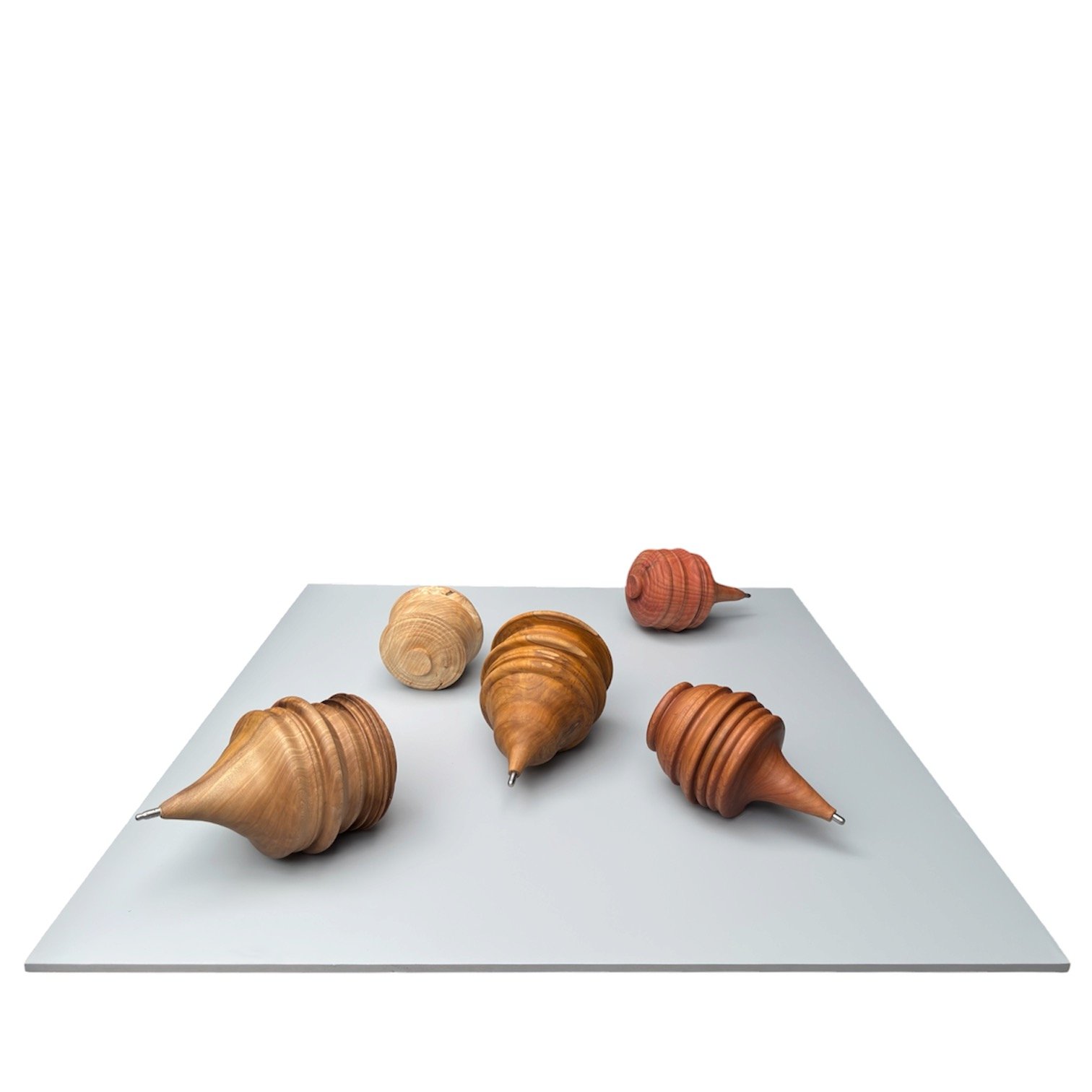
TROMPOS DE UNA SOLA CUERDA.
ES
TROMPOS DE UNA SOLA CUERDA: EL PERFIL CONTINUO DEL PODER. MILER LAGOS.
En 1933, el escultor futurista italiano Renato Bertelli patentó el “Profilo Continuo del Duce”(Perfil continuo de Mussolini), un busto de cerámica que utilizaba una rotación cilíndrica de 360 grados para capturar la silueta de perfil de Benito Mussolini. Esculpido de manera circular, el rostro distintivo del dictador era visible desde todos los ángulos; su sombra evocaba los populares retratos recortados de la época victoriana y marcaba el inicio de otra, profundamente arraigada en el populismo. Mussolini lo adoptó con entusiasmo como retrato oficial del Estado. Era la metáfora visual definitiva del contexto político prevalente y un claro mensaje de la omnipresencia que el líder deseaba proyectar: un panóptico mecánico que lo veía todo, congelado en el tiempo, que fusionaba al antiguo dios romano Jano, alusión mitológica al inicio de una nueva era, con la metáfora inherente de la velocidad industrial del futurismo italiano.
Más de un siglo después del nacimiento del futurismo, el artista colombiano contemporáneo Miler Lagos resucita y subvierte la fórmula de Bertelli. En una sorprendente serie conceptual,Lagos ha elaborado cinco bustos cilíndricos giratorios que perfilan a cinco figuras que lideran la política latinoamericana y americana contemporánea. Sin embargo, mientras que el original de Bertelli fue moldeado con materiales industriales diseñados para ser reproducidos en masa, glorificando así la era de las máquinas, Lagos talla sus caracteres a partir de troncos de árboles recuperados de maderas tropicales y amazónicas que estarían en peligro de extinción bajo las leyes que favorecen la explotación de hidrocarburos por encima de la preservación de la biodiversidad ecológica. Al perfilar los rostros del poder populista de la tendencia políticacontemporánea, Miler alude, a su vez, a la realidad material de la afectación ecológica derivada de las decisiones que favorecen la explotación de los recursos naturales en nombre del consumoy crea un diálogo profundo sobre la longevidad histórica del futurismo, las mutaciones del carisma autoritario y el costo de la ambición humana tallada en el planeta.
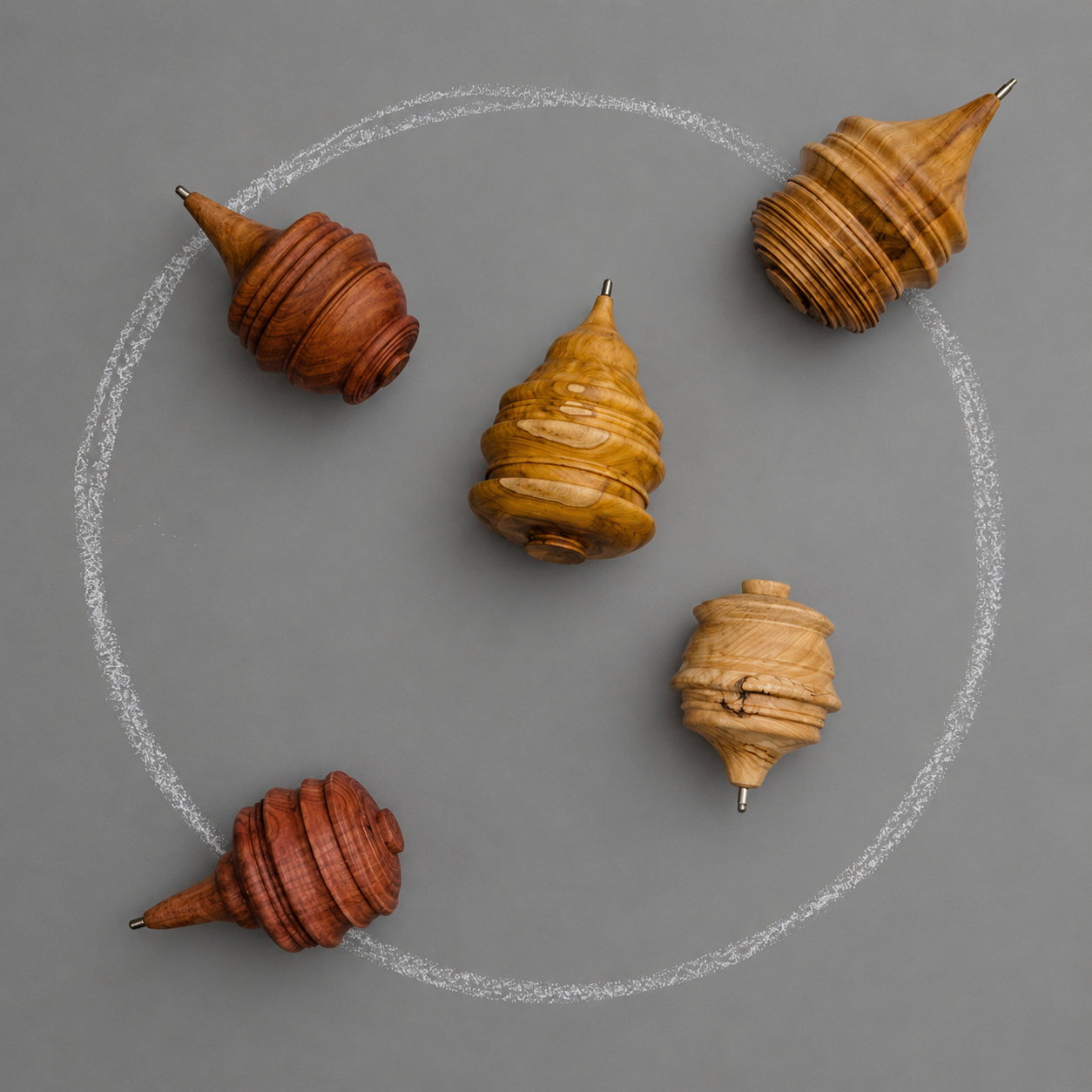
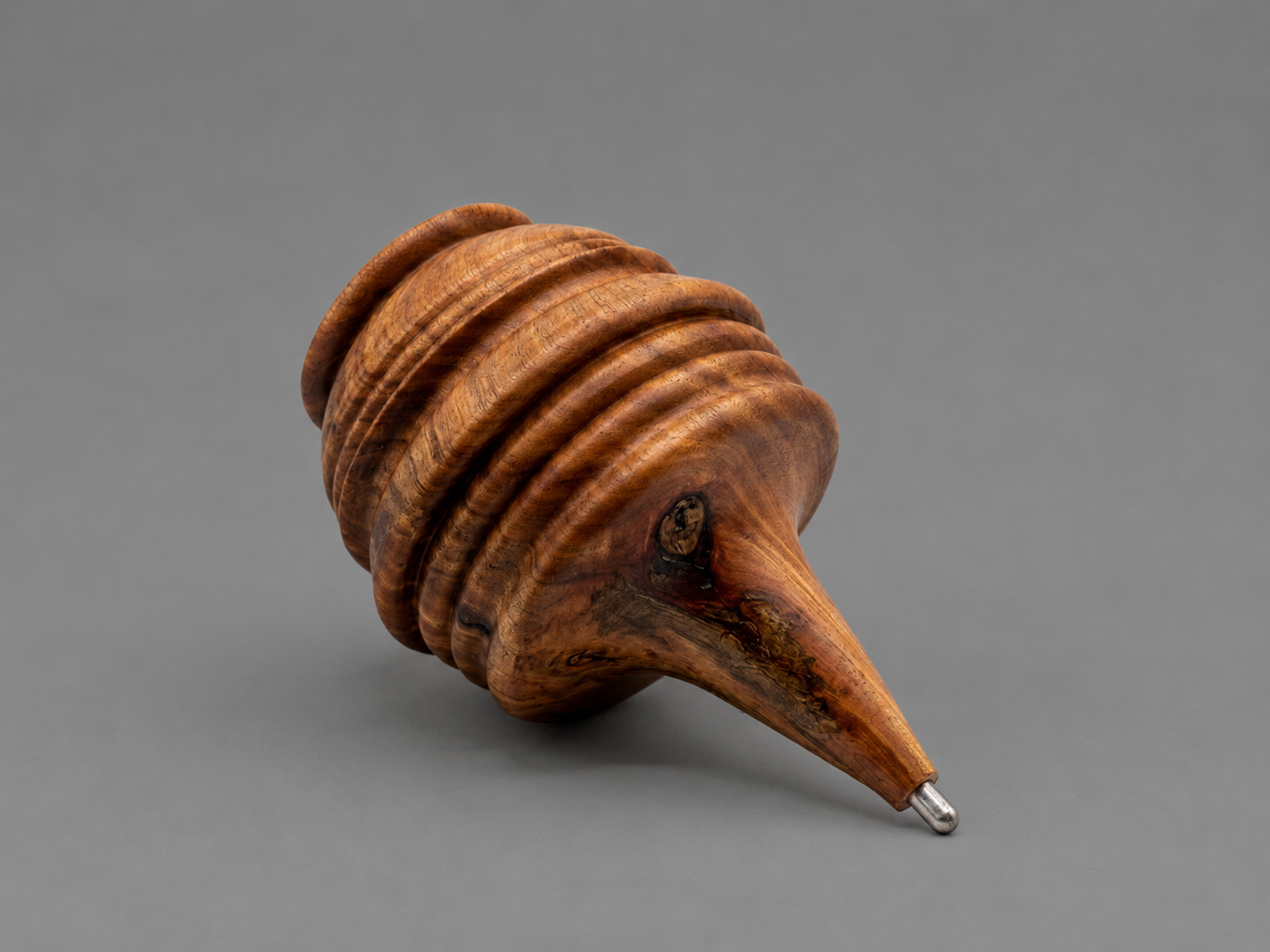
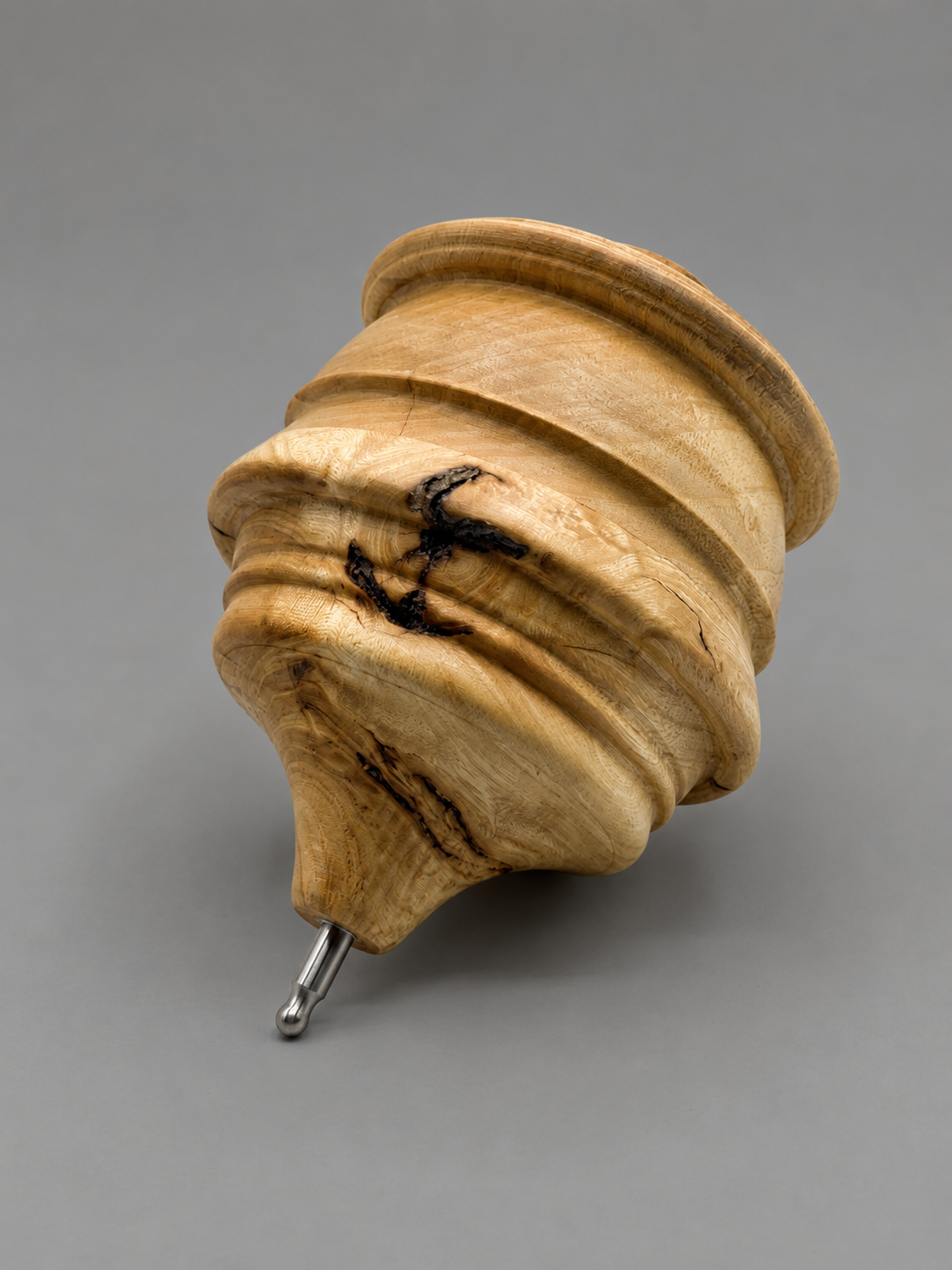
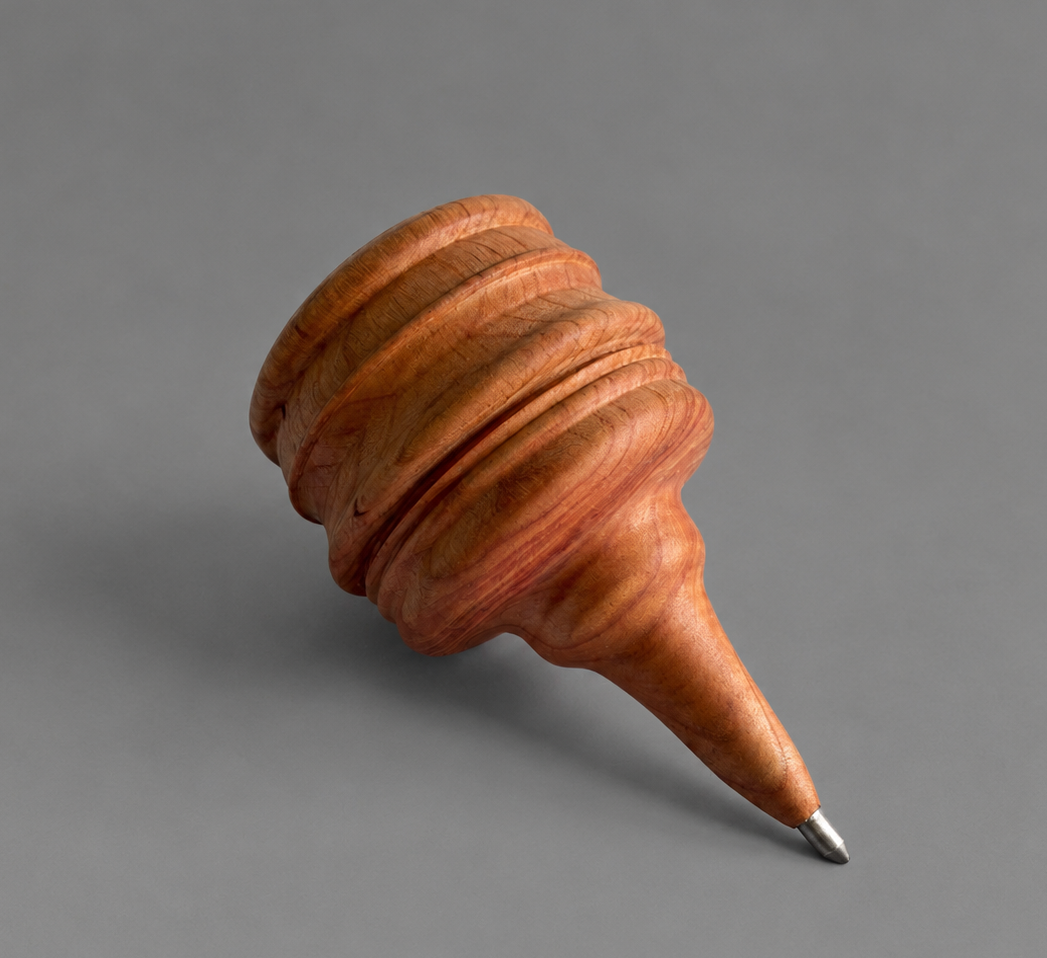
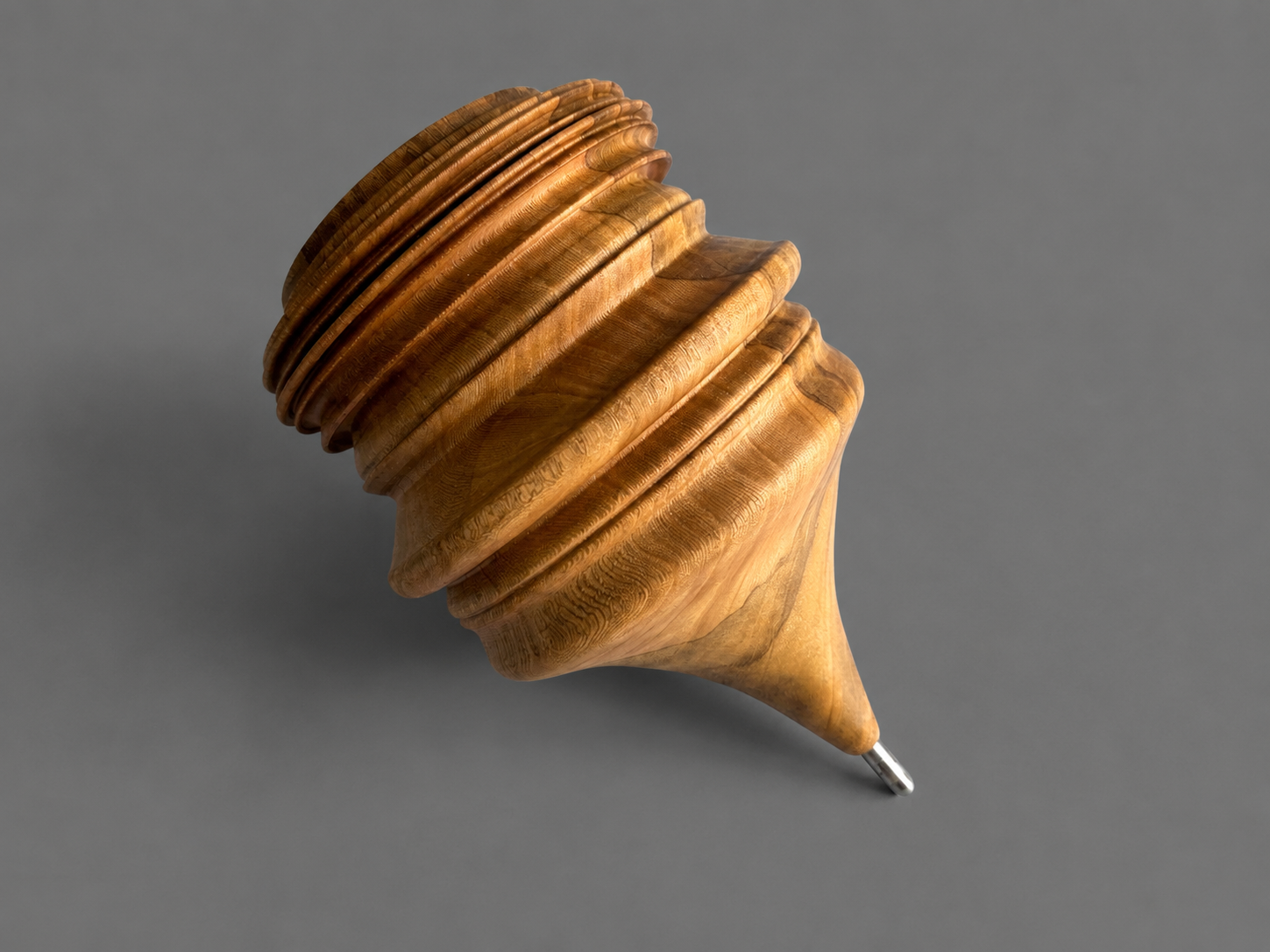
Y un detalle importante: más allá de la subversión material de las maderas elegidas, Lagos introduce una decisión de ingeniería crítica que rompe con la monumentalidad habitualmente asociada a los bustos políticos: la base de cada escultura remata en una punta metálica, semejante a la de un juguete popular y humilde: el trompo. Tradicionalmente, el retrato escultórico de corte autoritario exige un pedestal macizo e inamovible. El “Perfil continuo” original de Bertelli se asentaba firmemente sobre bases cilíndricas estables, anclando al dictador a la tierra y proyectando una sensación de permanencia eterna. Lagos, en cambio, despoja a estos líderes modernos de sus cimientos. Al equilibrar un bloque pesado y denso de madera tropical sobre un único vértice metálico de gran precisión, la escultura plantea una profunda paradoja cinética y visual, así como una metáfora histórica inevitable.
LA SUBVERSIÓN MATERIAL:
MADERAS PRECIOSAS FRENTE A MÁQUINAS INDUSTRIALES.
La genialidad profunda de la intervención de Lagos radica en su ruptura radical con la materialidad futurista. Los futuristas originales detestaban la naturaleza; exaltaban el asfalto, la viga de acero y la industrialización por encima del paisaje. La obra original de Bertelli fuerealizada en cerámica lisa, bronce y aluminio: materiales concebidos para la producción en serie, la réplica y la eliminación de las texturas naturales. Lagos, por el contrario, construye a los líderes a partir de troncos recuperados de maderas tropicales y amazónicas. Esta elección orgánica subvierte por completo los principios fundamentales de la fórmula fascista. En lugar de una pieza de maquinaria industrial, los rostros de estos líderes quedan vinculados a la materia viva —finita, ancestral y marcada por cicatrices— del ecosistema latinoamericano. La madera porta su propia narrativa histórica: se trata de troncos recuperados de especies tropicales de crecimiento lento y de explotación intensiva, a menudo extraídos de regiones que sufren una deforestación catastrófica. En manos de Lagos, el perfil continuo deja de ser un símbolo del tiempo futurista, limpio y eterno, para convertirse en un reloj que marca el deterioro ecológico. Los nudos naturales, las vetas y las grietas inherentes a la madera rompen la geometría impoluta de los rostros. A medida que la madera se expande, se contrae y envejece, los perfiles esculpidos de los líderes elegidos se deformarán y agrietarán de forma natural e inevitable.
El panóptico moderno: perfiles del poder.
Las cinco figuras elegidas por Lagos ocupan nodos específicos dentro del panorama global contemporáneo del populismo de derecha, de la retórica nacionalista y de la espectacularizaciónjurídico-política y los vínculos a un neofascista a priori abanderado por el movimiento futurista.
Al vincular a estos cinco líderes tan distintos bajo una misma fórmula visual, Lagos demuestra cómo el poder contemporáneo —abanderado por arengas de progreso social capitalista, el nacionalismo conservador o el populismo de «ley y orden»— retorna inevitablemente a la misma arquitectura estética: la mirada ejecutiva, inquebrantable y omnisciente.
A través de esta obra, Miler Lagos ofrece una crítica demoledora de la intersección entre la política autoritaria moderna, la estética de las vanguardias históricas y el Antropoceno. Al tallar los iconos de una neopolítica totalitaria directamente en la madera de los bosques amazónicos y tropicales, encaminados a una eventual extinción debido a los proyectos de explotación del medio ambiente, Lagos vincula la soberbia política absoluta del «líder que todo lo ve» con la extracción y el consumo agresivos del mundo natural. Mientras que el Mussolini de Bertelli aspiraba a proyectar un Estado que sobreviviera a la naturaleza gracias a la tecnología, las esculturas de Lagos nos recuerdan que la autoridad absoluta del soberano político moderno depende totalmente de —y es cómplice de— la destrucción del medio ambiente. Ante el equilibrio imposible de la base en forma de trompo, el espectador percibe que, en cuanto flaquea el frenético impulso político, todo el aparato de control creado, cargado de peso en su parte superior, sucumbirá a su propia masa y se desplomará en un colapso histórico como ocurrió en innumerables ocasiones. El perfil continuo deja de ser un monumento al triunfo de la máquina humana para convertirse en un testimonio solemne y giratorio del coste ecocida; revela que los rostros del poder moderno están literalmente tallados a partir de la savia vital de la Tierra, que se desvanece mientras aguardan a que la gravedad siga su curso.
EN
SINGLE-STRING SPINNING TOPS: THE CONTINUOUS PROFILE OF POWER. MILER LAGOS.
In 1933, Italian Futurist sculptor Renato Bertelli patented the “Profilo Continuo del Duce” (Continuous Profile of Mussolini), a ceramic bust that used a 360-degree cylindrical rotation to capture the profile silhouette of Benito Mussolini. Sculpted in the round, the dictator’s distinctive face was visible from every angle; its shadow evoked the popular silhouette portraits of the Victorian era and marked the beginning of another, deeply rooted in populism. Mussolini enthusiastically adopted it as an official state portrait. It was the definitive visual metaphor of the prevailing political context and a clear message of the omnipresence the leader sought to project: a mechanical panopticon that saw everything, frozen in time, merging the ancient Roman god Janus, an allusion to the beginning of a new era, with the inherent metaphor of the industrial speed of Italian Futurism.
More than a century after the birth of Futurism, contemporary Colombian artist Miler Lagos resurrects and subverts Bertelli’s formula. In a striking conceptual series, Lagos has created five rotating cylindrical busts depicting five figures who have shaped contemporary Latin American and American politics. Yet while Bertelli’s original was molded from industrial materials designed for mass reproduction, thereby glorifying the machine age, Lagos carves his figures from reclaimed trunks of tropical and Amazonian woods that would be threatened with extinction under laws favoring hydrocarbon exploitation over the preservation of ecological biodiversity. By profiling the faces of contemporary populist political power, Miler also points to the material reality of ecological damage resulting from decisions that favor the exploitation of natural resources in the name of consumption, creating a profound dialogue about the historical longevity of Futurism, the mutations of authoritarian charisma, and the cost of human ambition carved into the planet.
And there is one important detail: beyond the material subversion of the chosen woods, Lagos introduces a critical engineering decision that breaks with the monumentality usually associated with political busts: the base of each sculpture ends in a metal point, resembling that of a popular and humble toy, the spinning top. Traditionally, authoritarian sculptural portraiture requires a massive, immovable pedestal. Bertelli’s original “Continuous Profile” rested firmly on stable cylindrical bases, anchoring the dictator to the earth and projecting a sense of eternal permanence. Lagos, by contrast, strips these modern leaders of their foundations. By balancing a heavy, dense block of tropical wood on a single, highly precise metal point, the sculpture introduces a profound kinetic and visual paradox, as well as an inevitable historical metaphor.
MATERIAL SUBVERSION:
PRECIOUS WOODS VERSUS INDUSTRIAL MACHINES
The profound brilliance of Lagos’s intervention lies in its radical rupture with Futurist materiality. The original Futurists despised nature; they exalted asphalt, steel beams, and industrialization above the landscape. Bertelli’s original work was made from smooth ceramic, bronze, and aluminum: materials conceived for serial production, replication, and the elimination of natural textures. Lagos, by contrast, constructs his leaders from reclaimed trunks of tropical and Amazonian woods. This organic choice completely subverts the fundamental principles of the fascist formula. Instead of a piece of industrial machinery, the faces of these leaders become bound to living matter, finite, ancestral, and marked by scars, from the Latin American ecosystem.
The wood carries its own historical narrative: these are trunks recovered from slow growing tropical species subjected to intensive exploitation, often extracted from regions suffering catastrophic deforestation. In Lagos’s hands, the Continuous Profile ceases to be a symbol of the clean, eternal time of Futurism and becomes a clock measuring ecological deterioration. The wood’s natural knots, grain, and cracks disrupt the immaculate geometry of the faces. As the wood expands, contracts, and ages, the carved profiles of the chosen leaders will naturally and inevitably deform and crack.
THE MODERN PANOPTICON: PROFILES OF POWER
The five figures chosen by Lagos occupy specific nodes within the contemporary global landscape of right wing populism, nationalist rhetoric, the spectacularization of legal and political power, and the links to a neo fascist a priori championed by the Futurist movement.
By bringing these five distinct leaders together under a single visual formula, Lagos demonstrates how contemporary power, whether articulated through appeals to capitalist social progress, conservative nationalism, or “law and order” populism, inevitably returns to the same aesthetic architecture: the executive gaze, unwavering and omniscient.
Through this work, Miler Lagos offers a powerful critique of the intersection between modern authoritarian politics, the aesthetics of historical avant gardes, and the Anthropocene. By carving the icons of a totalitarian neo politics directly into the wood of Amazonian and tropical forests, destined for eventual extinction as a result of environmental exploitation projects, Lagos connects the absolute political arrogance of the “leader who sees everything” with the aggressive extraction and consumption of the natural world.
While Bertelli’s Mussolini sought to project a state capable of outliving nature through technology, Lagos’s sculptures remind us that the absolute authority of the modern political sovereign depends entirely upon, and is complicit in, the destruction of the environment. Faced with the impossible balance of the spinning top base, the viewer perceives that, as soon as the frantic political momentum falters, the entire apparatus of control, top heavy with its own weight, will succumb to its mass and collapse into a historical downfall, as has happened countless times before.
The Continuous Profile ceases to be a monument to the triumph of the human machine and becomes a solemn, rotating testimony to the cost of ecocide; it reveals that the faces of modern power are literally carved from the vital sap of a vanishing Earth, while they await gravity to take its course.

Trompos de una sola cuerda. vista Cenital
E.
B.
K.
M.
Instalación trompos de una sola cuerda.